Dental implants are a reliable way to replace missing teeth, but sometimes things go wrong. Implant tooth problems can range from minor soreness to serious infection, bone loss, or nerve issues. This article explains common implant tooth problems, how to spot them, immediate steps you can take, how dentists diagnose the issue, treatment options, prevention tips, and when to get emergency care. If you live in Albuquerque and have concerns, acting quickly can protect your implant and overall health.
Common implant tooth problems
Peri-implantitis (infection and bone loss)
Peri-implantitis is an infection around the implant that causes inflammation and bone loss. It often shows as swollen, red gums that bleed easily.
Loose or fractured abutment or crown
A loose or broken crown or abutment can make the implant feel unstable, affect chewing, and expose internal components to bacteria.
Failed osseointegration (implant not bonding to bone)
If the implant never properly fuses to the jawbone, it can feel mobile or painful and won’t support a restoration.
Nerve irritation, numbness, or altered sensation
Nerve irritation can cause numbness, tingling, or burning in the lip, chin, or tongue, often from placement too close to a nerve.
Sinus issues with upper implants
Upper implants that enter the sinus can cause sinus pain, congestion, or infection.
Occlusion and bite problems causing pain or wear
A high crown or poor bite alignment can lead to pain, chipped restorations, and pressure that damages the implant.
How to recognize implant tooth problems
Key symptoms include persistent pain, swelling, redness, pus, mobility of the implant or crown, bleeding gums, bad taste or odor, changes in bite, or lasting numbness. Mild symptoms (slight soreness, minor swelling) can be monitored for a day or two, but signs of pus, spreading swelling, severe pain, fever, or numbness are urgent.
Immediate steps to take if you suspect implant tooth problems
Avoid chewing on the affected side and keep the area clean. Rinse gently with warm salt water several times a day. Save any detached parts like a crown or abutment and bring them to your appointment. Over-the-counter pain relievers can help, but call your dentist right away if you see pus, severe pain, or spreading swelling.
How dentists diagnose implant tooth problems
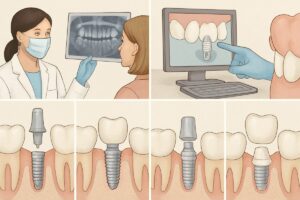
A dentist will do a clinical exam and probe around the implant to check for pockets and mobility. Imaging like digital x-rays and Cone Beam 3D (CBCT) scans evaluates bone, nerve position, and sinus involvement. Tools such as intraoral cameras, DIAGNOdent, and T-Scan bite analysis aid diagnosis.
Treatment options based on the problem
Non-surgical care
Professional cleaning, localized antiseptics or lasers, and targeted antibiotics can control early infection.
Prosthetic fixes
Tightening or replacing abutments or crowns often resolves mobility or fit issues. Broken restorations can be repaired or remade.
Surgical care
Advanced cases may need flap surgery, bone grafting, or implant removal and replacement.
Managing nerve or sinus complications
Specialized imaging and referral to a maxillofacial or ENT specialist may be needed for repair or management.
Preventing implant tooth problems
Brush and floss daily, use interdental brushes, and keep routine maintenance visits. Quit smoking, control diabetes, and treat bruxism with a nightguard. Proper planning and bite checks reduce risks.
Finding experienced help for implant tooth problems
Look for dentists with years of implant experience, CBCT imaging, digital bite analysis, and modern tools. Precision Dental Care in Albuquerque — Dr. Craig Steichen’s team — uses CBCT, T-Scan, lasers, and CEREC to diagnose and treat implant tooth problems precisely and comfortably.
When to seek emergency care
Get immediate care for severe uncontrolled pain, rapidly spreading swelling, fever, excessive bleeding, new numbness, or any breathing or swallowing difficulty. If you notice any signs of implant tooth problems, schedule an emergency care exam promptly to get a clear diagnosis and a treatment plan.