
Looking for a clear answer to the question “Are detailed dental treatments right for you?” This guide explains what “detailed dental” means here — a careful, technology-driven approach to replacing or restoring teeth — and helps you decide whether to move forward. You’ll get plain steps, who benefits most, what to expect, and practical next steps for detailed dental in Albuquerque.
What are detailed dental implants?
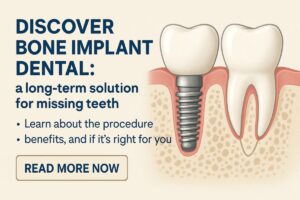
Detailed dental implants refer to a precise, planned way to replace a missing tooth or teeth. Each implant has three basic parts:
- Implant post — a titanium screw placed in the jaw bone.
- Abutment — a connector that sits on the post.
- Crown — the visible tooth made to match your bite and color.
What makes it “detailed dental” is the planning and tools used: 3D imaging, guided surgical guides, digital impressions, and careful step-by-step care. This contrasts with quick fixes that skip thorough imaging or long-term planning. Detailed dental in Albuquerque focuses on accuracy and long-term success rather than a fast, one-size-fits-all repair.
Who is a good candidate for detailed dental implants?
Oral health and bone needs
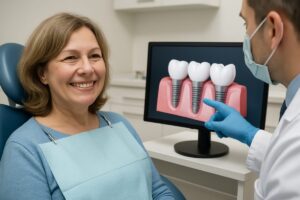
Good candidates usually have healthy gums and enough jaw bone to hold an implant. If bone is thin, a bone graft can rebuild volume so the implant will be stable. A cone beam 3D scan (CBCT) is commonly used to check bone and plan placement precisely—this is a key part of detailed dental planning.
Medical and lifestyle factors
Overall health matters. People with well-controlled diabetes, no active gum infection, and who are not heavy smokers do better. Smoking raises the risk of implant failure. Certain medications (like some bisphosphonates) and poor healing can affect candidacy. Age alone is not a disqualifier; healthy older adults often do well with implants.
What to expect: procedure, recovery, and risks
Typical steps for detailed dental implants:
- Consultation and 3D imaging to plan placement.
- Guided implant placement under local anesthesia (sometimes sedation).
- Healing period (osseointegration) while the implant bonds to bone.
- Placement of the abutment and final crown or prosthetic.
Recovery is usually straightforward. Expect swelling and soreness for 48–72 hours, soft foods for a few days, and pain controlled with over-the-counter or prescribed meds. Full bone integration often takes 3–6 months depending on the case. Rare complications include infection, implant failure, or nerve irritation; careful planning and follow-up reduce these risks.
Costs, timeline, and next steps
Costs vary by how many teeth you replace, whether grafts or scans are needed, and the type of final restoration. A single detailed dental implant will cost less than multiple implants or full-arch work. Common cost factors include the implant brand, lab fees for the crown, CBCT scans, and any grafting. Many practices offer payment plans or third-party financing to spread costs.
When choosing a provider, ask these questions:
- How many implants do you place each year?
- Do you use 3D imaging (CBCT) and guided implant planning?
- Can you show before-and-after cases and explain the expected timeline?
- Do you offer warranties or follow-up care for implants?
If you want a personalized plan, schedule a consult. For patients searching specifically for detailed dental in Albuquerque, Precision Dental Care led by Dr. Craig Steichen offers advanced imaging, guided planning, and modern crown options to shorten visits and improve fit. A short consultation will clarify costs, timeline, and whether detailed dental in Albuquerque is the best path for your smile.