
Dental bone implants are a promising option for restoring missing teeth with strength and longevity. If you’re weighing modern implant choices, this post explains what a bone implant dental treatment is, the types of implants, when bone rebuilding is needed, how the process works, who makes a good candidate, benefits and risks, how technology helps, and what to expect at a consult. It’s aimed at readers thinking about long-term solutions rather than temporary fixes.
What Is a Bone Implant Dental Treatment?
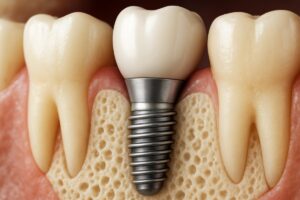
A bone implant dental treatment uses a titanium or ceramic post placed into the jawbone to replace a tooth root. Over time, the bone bonds to the implant in a process called osseointegration, creating a stable base for a crown or bridge. Unlike traditional crowns, bridges, or removable dentures, implants restore both root and tooth structure so they feel and function more like natural teeth.
Types of Implants and When Bone Work Is Needed
Endosteal vs. subperiosteal implants
Endosteal implants are the most common and are placed directly into the jawbone. Subperiosteal implants sit on top of the bone, beneath the gum, and are used when bone height is low. Choice depends on bone volume, anatomy, and overall health.
Bone grafts, sinus lifts, and ridge augmentation
If the jaw has shrunk after tooth loss, bone grafts, sinus lifts, or ridge augmentation rebuild bone so an implant can be stable. These procedures add bone or bone-like material where needed and may be performed before or during a dental bone implant procedure in Albuquerque.
How the Procedure Works — Step by Step
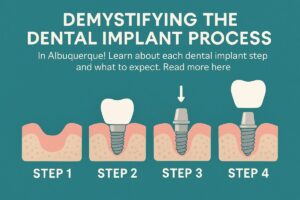
Typical steps: exam and 3D imaging, any grafting or sinus lift required, implant placement, osseointegration healing (usually months), and final restoration with a crown or bridge. CBCT (Cone Beam 3D imaging) is often used for precise planning and to avoid vital structures.
Who Is a Good Candidate for a Bone Implant Dental?
Good candidates are generally in good health, have adequate bone or are willing to undergo grafting, and practice good oral hygiene. Age alone rarely rules someone out; overall health and smoking status matter more. Detailed imaging helps determine dental implant candidacy in Albuquerque.
Benefits vs. Risks
Benefits
Implants restore chewing function, preserve surrounding bone, prevent shifting of nearby teeth, and often last many years. Compared to dentures, bone implant dental solutions offer greater stability and comfort.
Risks & recovery
Recovery includes swelling and mild discomfort. Possible complications include infection, implant failure, or graft loss. Healing time varies by procedure complexity; following post-op care and quitting smoking improves success.
How Technology Improves Success Rates
Tools like Cone Beam 3D imaging, digital x-rays, and computer-guided surgery reduce surprises and improve outcomes for dental implants in Albuquerque. Accurate imaging and guided placement help avoid nerves and sinuses, increasing the chance of successful osseointegration.
Cost, Timeline, and What to Expect at Consult
From consultation to final crown can take months, longer if grafting is needed. Costs depend on the number of implants, grafting, and materials. At consult ask about imaging (CBCT), implant brands, healing timelines, and financing options.
Why Choose a Practice With Implant Experience?
Experience and technology matter. Precision Dental Care in Albuquerque combines decades of implant training with CBCT and advanced tools to improve planning and comfort. Dr. Craig Steichen’s extensive training and modern systems help deliver predictable results for bone-implant dental candidates.
Next Steps
If you’re curious whether bone implant dental in Albuquerque is right for you, schedule a consultation with imaging. A personalized exam and CBCT scan will show your bone needs and outline clear options for a stable, lasting smile.