Considering dental implants? This guide explains the implant process in Albuquerque step by step so you know what to expect. You’ll learn the seven key stages of a dental implant procedure, typical timelines, recovery tips, risks, costs, and simple answers to common questions. By the end, you’ll have clear next steps to discuss with your dentist.
Quick overview: What is a dental implant and how the implant process works
A dental implant is a titanium post placed into the jaw to replace a missing tooth root. A crown, bridge, or denture attaches to the implant to restore chewing and appearance. The implant process in Albuquerque covers everything from the first exam to the final restoration and routine follow-ups.
In plain terms, the implant process moves through planning, surgery, healing, and final restoration. Good planning with 3D imaging and precise tools helps make the process predictable and comfortable for most patients.
The 7 steps of the implant process in Albuquerque
Step 1 — Consultation and oral exam
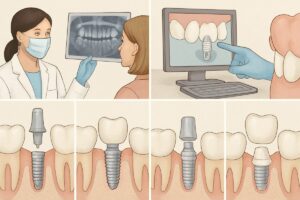
First you meet the dentist for a health review and oral exam. Expect questions about medical history, medications, and smoking. Digital x-rays and intraoral cameras are used to show current tooth and bone health. This first step sets goals and checks if dental implant treatment is right for you.
Step 2 — 3D imaging and treatment planning
A CBCT scan gives a 3D view of your jaw, nerves, and sinuses. Digital planning lets the dentist map exact implant positions before surgery. Precise planning reduces risks and improves success. This is a core part of the implant process in Albuquerque that improves safety and results.
Step 3 — Preparatory care (extractions, bone grafts, sinus lifts)
Some patients need extra work before implants. That can include removing failing teeth, bone grafts to rebuild lost bone, or sinus lifts for upper jaw cases. These steps add time to the overall schedule but create a stronger foundation for the implant.
Step 4 — Implant placement surgery
During surgery the implant is placed into the bone. Sedation options range from local anesthesia to IV sedation depending on your comfort. Guided surgery tools and 3D templates can make the procedure faster and more accurate than older methods.
Step 5 — Healing and osseointegration
After placement the bone grows around the implant in a process called osseointegration. Healing usually takes several months. Normal signs include mild swelling and soreness. Severe pain, fever, or increasing swelling are warning signs that need quick attention.
Step 6 — Abutment placement and digital impressions
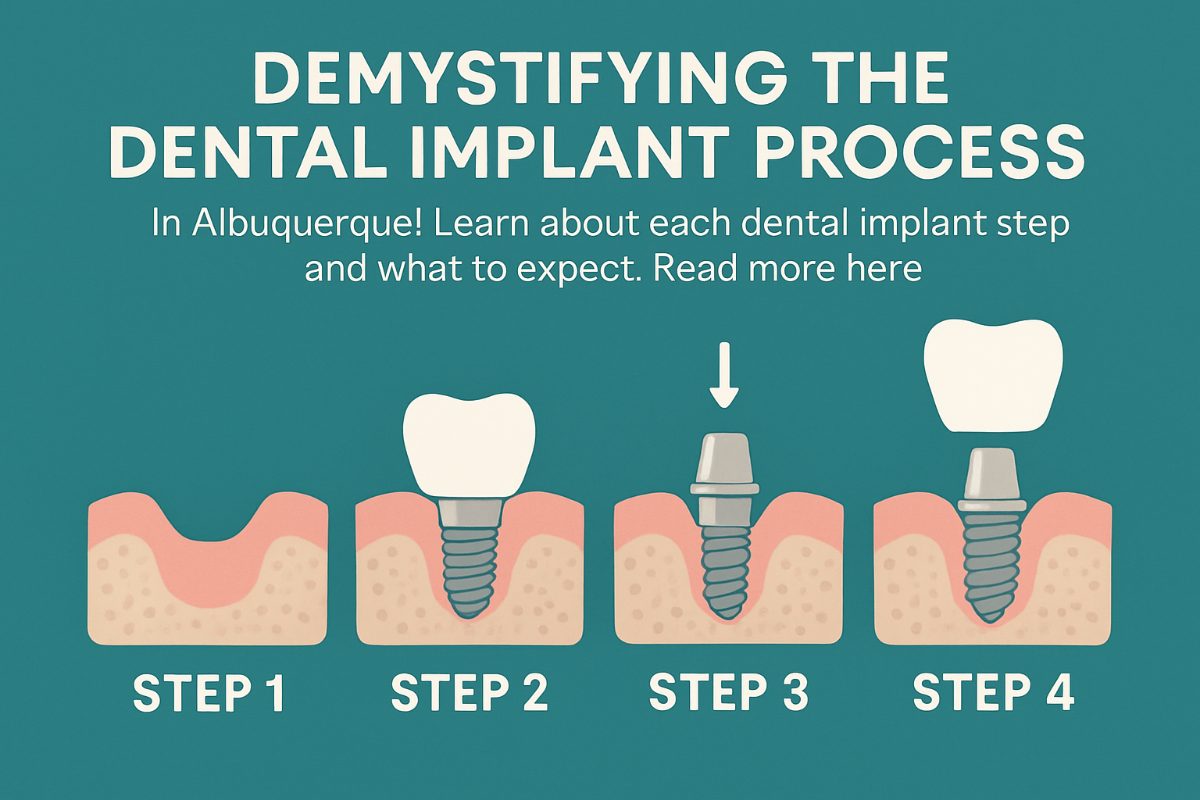
Once bone has fused, the dentist attaches an abutment—the connector between implant and crown. Digital impressions or CEREC scans capture exact bite and tooth shape for the final restoration. Digital workflows shorten lab time and improve fit.
Step 7 — Final crown, bridge, or denture placement
The final stage places the custom crown, bridge, or denture. Bite is checked with tools like T-Scan to ensure even pressure and comfort. You’ll get care instructions for cleaning and follow-up visits to monitor healing and function.
Typical timeline, pain control, and recovery expectations for the implant process in Albuquerque
Timelines vary, but a common plan looks like this:
- Consult and planning: 1–3 weeks
- Preparatory care (if needed): 4–6 months for graft healing
- Implant placement to final crown: 3–6 months for osseointegration
Pain is usually managed with over-the-counter meds or prescribed painkillers for a short time. Stick to soft foods for the first few days, avoid smoking, and keep the surgical site clean. Follow-up visits check healing and remove sutures if needed.
Risks, success rates, and how to lower complications during the implant process
Implant success rates are high—often over 95% with good planning and care. Common risks include infection, implant failure, nerve irritation, or sinus problems. Signs of trouble are severe, worsening pain, pus, fever, or loose implants.
Lower your risk by keeping good oral hygiene, controlling medical conditions like diabetes, quitting smoking, and choosing a provider who uses CBCT and digital planning. Careful preparation and experienced placement greatly reduce complications during the implant process in Albuquerque.
Cost, insurance, and financing for a dental implant in Albuquerque
Costs depend on how many implants, whether bone grafts or extractions are needed, and the type of final restoration. Single implants with a crown typically cost more than dentures but last longer. Dental insurance may cover part of the restoration or surgery in some plans. Many practices offer financing, monthly payment plans, or third‑party loan options to spread costs.
Why choose Precision Dental Care for your implant process in Albuquerque
Precision Dental Care combines 28+ years of experience under Dr. Craig Steichen with advanced tools like CBCT, CEREC, T-Scan, and intraoral cameras. That mix of experience and technology helps deliver precise planning, comfortable procedures, and long-lasting results for the implant process in Albuquerque.
FAQs about the implant process in Albuquerque
- How long does a dental implant take from start to finish? Usually 3–9 months, longer if grafting is needed.
- Will getting implants hurt? Most patients report only mild to moderate pain controlled with medication. Sedation options reduce anxiety and discomfort.
- Can I get implants if I have gum disease or low bone? Gum disease should be treated first; bone grafting can often rebuild lost bone to allow implants.
- How long do implants last? With good care, implants can last decades and often a lifetime.
- When can I eat normally after my implant? Soft foods first few days; full chewing return typically after the final crown and a short adjustment period.
Ready to learn how the implant process in Albuquerque can restore your smile? Schedule a consultation at Precision Dental Care to review your options and next steps.