How long do teeth implants last depends on which part you mean, your health, and how well you care for them. The implant fixture (the metal post) often lasts 20 years or more and can be a lifetime with good bone and gum health. Restorations like crowns and abutments typically last 8–15 years before requiring repair or replacement. Good hygiene, regular dental visits, and treating bite or health issues can push those ranges higher.
What a dental implant is (quick overview)
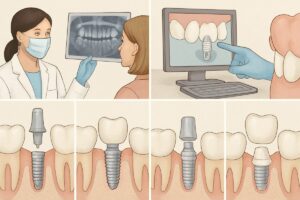
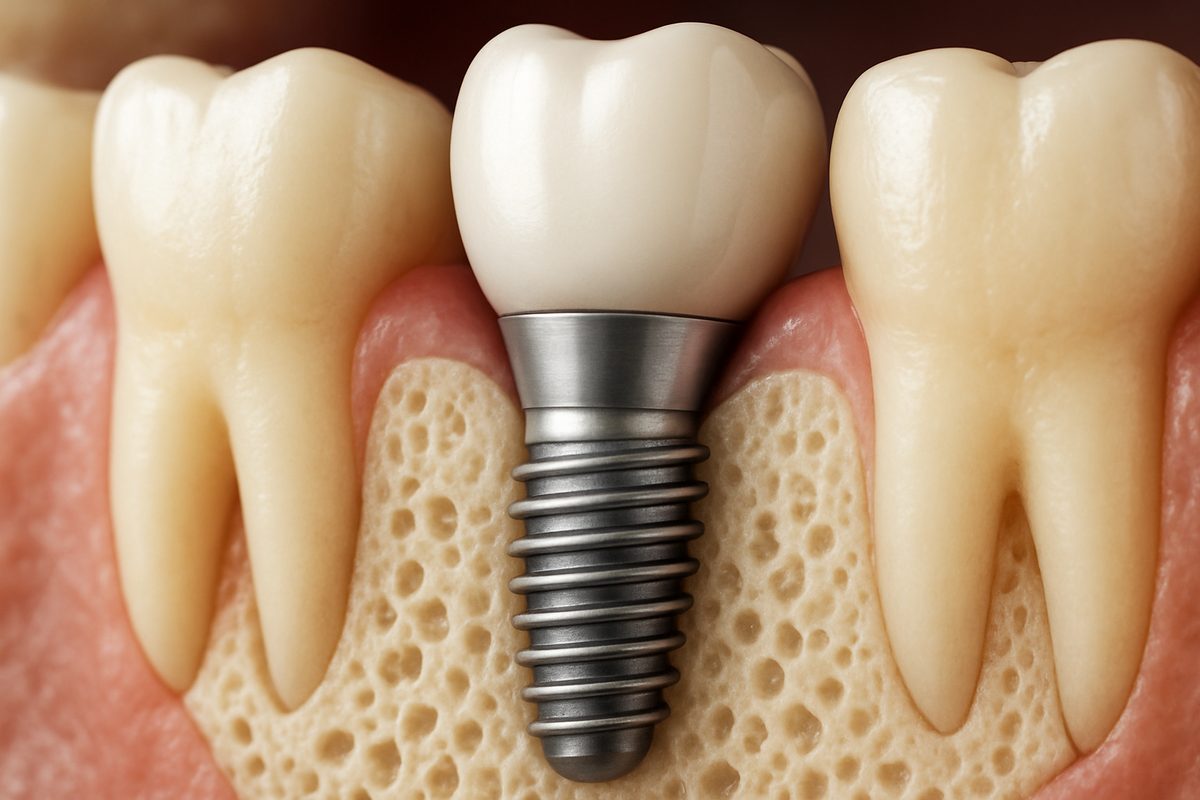
A dental implant replaces a missing tooth with three main parts: the implant fixture (a titanium or zirconia post placed in the jawbone), the abutment (which connects the post to the visible tooth), and the crown (the tooth-shaped restoration). Each part sees different forces and wear. The post integrates with bone and aims for long-term stability, while crowns and abutments face chewing wear and cosmetic needs—so their lifespans differ, which is why answers to how long dental implants last vary.
Typical lifespans: implant fixture vs crown
Implant fixture (the post)
The fixture fuses to bone (osseointegration) and, when bone and gums stay healthy, can last decades or a lifetime. Failures are most common early if healing or placement problems occur, or later if bone loss or infection develops.
Crowns, abutments, and other restorations
Crowns and abutments are exposed to chewing, grinding, and wear. Crowns commonly need replacement every 8–15 years, depending on material (porcelain, zirconia), bite forces, and maintenance. Abutments can also wear or loosen and may be replaced sooner if damaged.
Key factors that determine how long teeth implants last in Albuquerque
Patient health and habits
Smoking, uncontrolled diabetes, and poor oral hygiene increase the risk of implant failure. Quit smoking, control blood sugar, and brush/floss daily to protect implants.
Bone quality, grafts, and healing
Strong, healthy bone supports long-term success. If bone loss requires grafting, healing and integration take longer and affect longevity. Regular follow-up helps identify problems early.
Occlusion and bite forces
Bruxism (teeth grinding) and an uneven bite can overload implants. Tools like T-Scan® digital occlusion analysis help identify and correct bite issues so implants last longer. Night guards can protect restorations from grinding.
Materials and prosthetic design
Titanium and high-quality zirconia fixtures are proven for longevity. Crown materials and the design of the restoration (fit, occlusal contacts, access for cleaning) affect wear and service life.
How to maximize implant lifespan
Follow daily home care, attend routine cleanings and exams with x-rays, wear a night guard if you grind, stop smoking, and replace crowns when worn. Advanced planning with CBCT scans and precise restorations made with CEREC® can improve fit and predictability, reducing complications.
Warning signs of implant trouble
Watch for persistent pain, swelling, pus, mobility, gum recession around the implant, or sudden bite changes. These are red flags—seek prompt dental evaluation.
Why choose Precision Dental Care for long-lasting implants
Dr. Craig Steichen brings decades of implant training and uses advanced tools—CBCT planning, T-Scan bite analysis, and CEREC same-day crowns—to plan and restore implants for lasting results. Precision Dental Care focuses on accuracy and preventive technology to help implants last.
Next steps / Call to action
If you’re worried about how long teeth implants last or want a longevity plan, schedule a consultation at Precision Dental Care in Albuquerque. We’ll evaluate your health, bone, and bite, then build a personalized plan to keep your implants lasting as long as possible.