Many people ask whether a dental implant is the right choice after losing a tooth. A dental implant post is the metal or ceramic piece that sits in the jawbone and supports a tooth crown, dental bridge, or denture. This blog will explain what a dental implant post is, who’s a good candidate, what to expect, risks and benefits, and next steps so you can decide if this treatment — including a dental implant post in Albuquerque — might be right for you.
What is a post for dental implant?
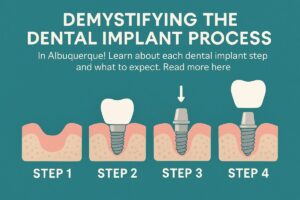
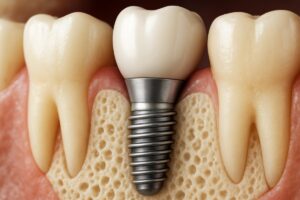
A dental implant post (also called the fixture) is the part placed into the jawbone. After it fuses with bone, an abutment connects the post to a tooth crown or dental bridge. This differs from a post-and-core used inside a root-canaled natural tooth; dental implant posts replace the root itself, giving stable support and helping preserve nearby bone.
Types of dental implant posts and abutments
Titanium vs zirconia
Titanium posts are the most common. They are strong, biocompatible, and have decades of good results. Zirconia is tooth-colored and used when esthetics are critical or for patients with metal sensitivities. Zirconia can be more brittle but looks more natural in some cases.
Stock, custom, and angled abutments
Stock abutments are off-the-shelf and work well for many cases. Custom abutments are made to match your tooth and gum shape for a better fit and look. Angled abutments let the restoration sit straight when the dental implant is placed at a tilt or when space is limited. Choice affects fit, appearance, and cost.
Who is a good candidate for a post for dental implant?
Good candidates have enough healthy jawbone density, healthy gums, and overall stable health. Non-smokers do better; smokers are often asked to quit before dental implant surgery. If bone is thin or low in the upper jaw, bone grafting or a sinus lift may be needed before placing the dental implant post in Albuquerque. Your dentist will review medical history and imaging to confirm candidacy.
What to expect during the dental implant post process
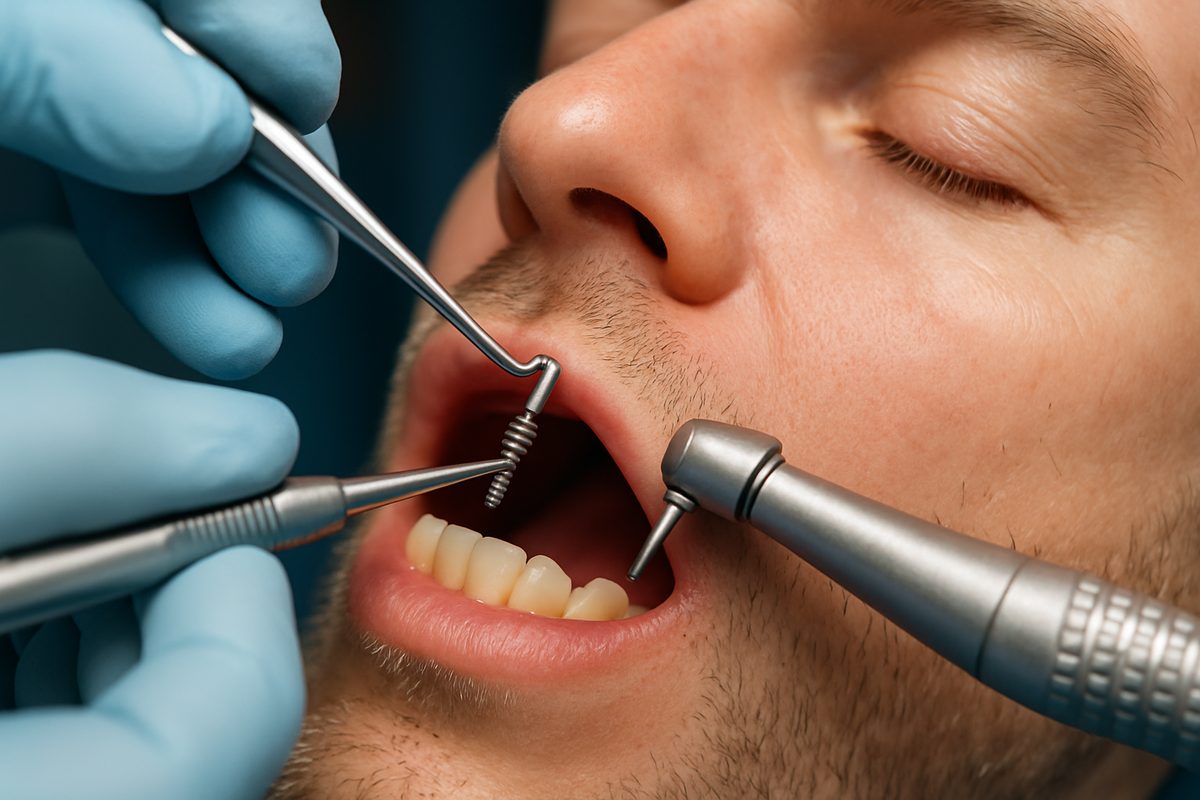
First is a consultation with imaging (often CBCT) to plan placement. The post is surgically placed into bone under local or sedation anesthesia. A healing period follows (osseointegration) that can take several months. After healing, an abutment/post connection is placed and impressions are taken for the final tooth crown or prosthesis. Some practices offer same-day provisional crowns in select cases.
Risks, benefits, and success rates
Benefits include restored function, improved appearance, and bone preservation. Risks include infection, peri-implantitis (gum inflammation around the implant), and rare dental implant failure. Success rates are high — often over 95% long-term with proper care and good health. Regular follow-up and good oral hygiene reduce risk.
Caring for your dental implant post long term
Brush twice daily, floss or use interdental brushes around the dental implant, and keep routine professional cleanings. Watch for redness, swelling, bleeding, or pain around the dental implant and report issues promptly. Regular checkups help catch problems early.
Why consider Precision Dental Care for dental implant posts
Precision Dental Care in Albuquerque, led by Dr. Craig Steichen with 28+ years of experience, uses CBCT planning and modern tools like CEREC same-day tooth crowns to improve accuracy and outcomes. Their tech and training help make implant post planning and restoration predictable and comfortable.
Improve your smile with a post for dental implant, today
To learn more about a post for dental implant in Albuquerque, contact us to schedule a consultation. Bring medical history and any recent x-rays. The dentist will review options, timing, costs, and alternatives to help you choose the best path forward.